 During his surgical residency, he received an Outstanding Resident Award (1989), and in 1990 was runner up for the John Price Award for Outstanding Teaching Resident, as chosen by the medical students.


Dr. Richard Bosshardt
Like most surgeons, Dr. Bosshardt Loves to operate and wield his scalpel in the practice of his craft. In addition to his role as a surgeon to help his patients with their cosmetic and reconstructive concerns, he loves to wield his pen for the purpose of educating, encouraging, and empowering his readers to live a fuller and healthier life. As human beings, we have been gifted with an incredible and unique physical body capable of extraordinary things. It is his hope that his writing will help readers learn a little more about plastic surgery but, even more important that it will not just inform, but inspire, readers to take care of their bodies and make the most of their physical potential to live life to the fullest, whether with or without plastic surgery.
Dr. Bosshardt is a fully trained general surgeon and plastic surgeon, board certified by the American Board of Plastic Surgery. He was fortunate to obtain his training in plastic surgery from Dr. D. Ralph Millard, an icon in the field and acknowledged to be one of the top plastic surgeons of the past millennium. The training was unique in stressing not just learning surgical techniques and procedures, but principles as well. These principles can both guide the plastic surgeon in perfecting their craft and anyone in living a better life.
Dr. Bosshardt has been in private practice in Lake County, FL for 23 years. In addition to plastic surgery and writing, his passions are endurance sports, particularly triathlons and marathons, and, most especially, his family including wife, Sally; children, Lindsey, Travis, and Olivia; son-in-law, David; and grand daughters, Emerson and Elliette.
In November 2013, Dr. Bosshardt successfully completed the Florida Ironman triathlon in Panama City, FL in 13 hours, 36 minutes, and 33 seconds, capping off a year of dedicated training.
A little know fact about laser liposuction
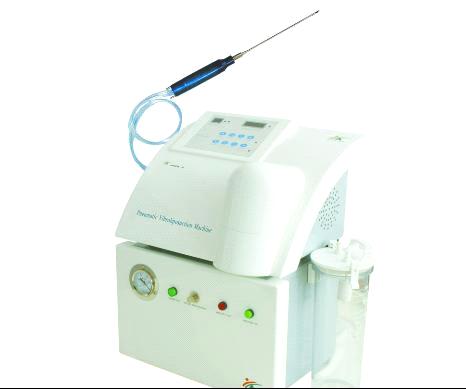
In surgery, you can’t always have your cake and eat it too. Doing any operation results in changes, e.g. a scar, that cannot be reversed and may affect the ability to do future surgery successfully. A striking example of this is cosmetic abdominal surgery using laser assisted liposuction.
... Continue readingWho should you see for your skin cancer
Different medical specialties often share some areas in common. One example would be hand surgery. General surgeons, orthopedic surgeons, and plastic surgeons all receive some training in hand surgery during their respective residencies. Some go on to specialize in this area. Skin cancer is another area that straddles specialties with general surgeons, plastic surgeons, and dermatologists all offering their services to patients with skin cancer. So, who should you go to?
Skin cancer, of course, is primarily a disorder of the skin and so it would seem obvious to go to a dermatologist for this. Dermatologists treat a lot of skin cancers and, indeed, some subspecialize in this area. Dermatologists can treat most skin cancers. They may offer freezing, burning, scraping, laser, and surgery. For the last one, dermatologists often use a technique called Moh’s surgery to remove skin cancers. This technique dates back to the 1930’s and is still considered the “gold standard” by the specialty.
In Moh’s, the dermatologist removes the cancer, cutting very closely along the margins of the lesion, then examines the tissue carefully to determine that the cancer has been totally removed. If there is cancer in the specimen margin(s), otherwise known as a positive margin, they will go back and take a little more and repeat the process until the margins are clear. The good side of Moh’s is that very little normal skin is removed, creating the smallest possible wound while removing the cancer fully. The bad side is that it is very tedious and time consuming for patients, often requiring 3, 4, or more excisions that can stretch out for several hours. And, that is just for the excision portion of the procedure. When that’s done, the wound created by the surgery must be closed. A simple closure with sutures is easiest and, when possible, any surgeon can do this. Some of the wounds are too extensive and require skin grafts and/or skin flaps to close them. Most dermatologists who perform Moh’s are able to do small skin grafts and flaps, but for larger defects, or defects in a critical location, they will refer patients to a plastic surgeon for the reconstruction. This may delay the whole process by several days to a week or more because the plastic surgeon has to see the patient and schedule time for this surgery. Such a delay could be critical in some situations, such as when there is exposed cartilage in the wound. Cartilage that is exposed rapidly dies and can be a source of infection.
... Continue readingAnd the best filler is......?
The buzz word in facial rejuvenation today is "volumization". That may not actually be a real word but it does reflect an increasingly popular concern in facial rejuvenation. Traditional approaches to rejuvenating a face have taken one, or both, of two approaches: surgical tightening, such as with a facelift, or smoothing, done with chemical and laser peels. Both have their place and can provide substantial benefits to carefully selected patients.
One of the less appreciated changes that accompanies aging is volume loss. In our largely overfed and overweight culture, this is often overlooked because weight gain can mitigate some of the loss of fat in the face over the years. Many people, however, show obvious loss of fullness in their faces with aging. In those who maintain their weight at an ideal, this can even produce a "gaunt" or "severe" look to the face. The solution is to restore volume.
Twenty plus years ago, the only available commercial filler was collagen, derived from the hide of cows. 2% of the population was naturally allergic to this and so patients needed to have a skin test done before they could have collagen injections. While effective for filling small areas, cow collagen rarely lasted more than a couple of months, making it prohibitively expensive and impractical. With the advent of better fillers, cow collagen disappeared from the medical marketplace. Other forms of collagen, such as from human tissue banks, are still available but have not been popular.
... Continue readingIs your plastic surgeon a used car salesman?
Imagine this scenario. You go to a car lot to buy a car. The car salesman walks up (realizing that car salesmen don’t have the best reputation, being just a few notches up from lawyers, politicians, and telemarketers, we’ll assume this one is an upstanding sort).
“Hi, how may I help you?”
... Continue readingOld Breast Implants
If you have had breast implants for 20 years or more, congratulations. You weathered the turbulent 90’s with the unprecedented media hysteria surrounding the concern of possible harm to women’s health from breast implants. Millions of women were needlessly frightened, some terrified, and many underwent unnecessary surgery to remove their implants after being told these would make them sick. It took over 10 years of good science and clinical studies to put these issues largely to rest. It was not one of the finer chapters in the history of my specialty. Unfortunately, the specter of cancer and disease muddied the waters and obscured the fact that there are real problems with breast implants.
I tell every patient who comes in to discuss possibly having implants inserted the same thing: inserting breast implants is an inherently unnatural thing to do and there are very real problems and downsides to having implants. I take great pains to inform women of these. It seems to only very rarely dissuade any of them from going forward. Such is the popularity of, and desire for, what implants can do. So, what are the problems with old implants?
Breast implants made two decades, or more, ago were made using technology available then. This may seem an obvious thing to say but it is important not to judge them based on what we know now. Back then, the goal was to make the implants feel as much like breast tissue as possible. Gel implants contained a very liquid, runny gel. When these implants developed even the tiniest hole, the gel would ooze out of them into the pocket around the implants. Some implants were made with a very thin shell and the silicone gel could even diffuse out through pores in the intact implant shell. This was called gel “bleed” and explained how some intact implants had sticky gel on the outside years later.
... Continue readingIn search of Goldilocks' breasts
Size matters. I once had a body builder come in with an infected biceps implant. I don’t insert these as the complication rate is high and, personally, I just don’t like this type of surgery. I asked the fellow, whose biceps were already huge, why he had implants put in at all. His answer was telling. He said, “you know how it is, Doc, when you have 28 inch biceps, you want 29 inch biceps”.
Imagine for a second if Goldilocks, when she was older, had sought breast implants. After the first operation, she would have exclaimed, “these implants are too big!”. After a revision, she would have observed, “These implants are too small!”. After her exasperated plastic surgeon revised her yet a second time, hopefully she declared, “these implants are just right!”.
The holy grail of breast implant surgery is the augmented breast that looks and feels natural and is the perfect size for the individual. Focusing on the latter issue, what is the perfect size breast? The answer to this question is as varied as are the women who seek breast augmentation. What is perfect to one is too large for another and too small for yet a third individual. Figuring out what size implant to choose for a patient is a large part of the “art” of this procedure.
... Continue readingK.I.S.S.
Keep It Simple, Stupid. This is something I tell myself all the time. The acronym K.I.S.S. is a reminder to never do something unnecessarily complicated when a simple solution will work equally well, or even better.
The training of a plastic surgeon includes in depth instruction in a wide variety of different grafts and flaps for reconstruction of defects produced by trauma, cancer treatment, and other 'misadventures' of life. Some of these are elegant and complex, and can salvage some very difficult reconstructive challenges. I once saw a patient who had undergone removal of a skin cancer on his cheek by a non-plastic surgeon. The scar gave clear testimony that the skin defect was reconstructed using a Lindberg Flap, named after the Russian surgeon who pioneered it.
A Lindberg flap uses skin and fat adjacent to the defect and has a trapezoidal shape. I have used them and, for certain defects, they work great. When former president Ronald Reagan had a skin cancer removed from his nose a Lindberg Flap was used to close the defect.
... Continue readingHow can I know what cup size I will be after implants?
Many questions have a simple answer and a more complicated one. The simple answer to this question is: you can’t, at least not precisely. The more complicated answer has to do with all the variables that come into play when discussing breast implants and size.
Most women know that when they buy bras of the same cup size from different manufacturers, they may not fit the same way. Different cup sizes from different manufacturers may fit the same. The reason for this, and what makes discussions of breast size so difficult, is that there is no standard for what an A, B, C, D, or other cup size really is. In a vault somewhere, in the National Bureau of Standards, there is a 12 inch ruler that is the standard for what 12 inches means. All rulers are made to that exact standard so that all 12 inch rulers are of identical length. No comparable standard exists for bra cup size. All manufacturers make bras to their own particular standards, which is why a B cup bra from one manufacture may fit you the same as a C cup from another.Victoria’s Secret bras are consistently smaller than other bras. I think this is to make their customers feel good that they can wear a C or D cup, when bras purchased elsewhere are B or C cups, respectively.
There are also multiple methods for measuring women for bra size and these can yield different cup sizes for the same person, further adding to the confusion.
... Continue readingIlluminating Lasers
If it involves a laser it must be better than a procedure without the laser, right? This is a common misconception which arises from our natural fascination with new technology. There is also an inherent desire in people ( or is it only Americans ) to be the first to experience the newest wrinkle, no pun intended, in plastic surgery. To understand laser resurfacing, one must know a little bit about lasers.
Laser. The word is an acronym and stands for Light Amplification by Stimulated Emission of Radiation . Laser light has several unique properties. It is monochromatic, that is, it contains only one color or wavelength of light. It is coherent, meaning that the light beam does not disperse with increasing distance from the source; the beam is focused, even at great distances. It is very powerful. The heat generated by some lasers is likened to that on the surface of the sun.
Lasers work by transmitting their energy to the material that they strike. If the material absorbs the laser light well, the laser light energy will transfer to the material which will heat up. The carbon dioxide (CO2) laser produces an invisible light which has a wavelength that is absorbed by water. When this light strikes a living cell, the laser energy is transferred to the water in the cell. If sufficient energy is transferred, the water in the cell will boil or vaporize, destroying the cell. In the past, CO2 lasers had limited usefulness in that a lot of their heat was transferred to areas around the target spot, producing too much collateral damage to tissues. The solution to this was pulsing. Pulsed lasers transmit an incredibly brief, incredibly powerful burst of laser light. On striking the skin, the first layer of cells is vaporized but before anymore underlying tissue can be damaged, the light has shut off. This allows the CO2 laser to resurface the skin, layer by layer, without producing a more extensive zone of injury, or burn. Although no longer a new technology, the pulsed CO2 laser is still the workhorse for skin resurfacing of the face and the results are the “gold standard” for this procedure. It does have the longest “down” time, leaves the skin quite pink for months, and is the most “invasive of the laser techniques.
... Continue readingAn on-line consultation for breast augmentation
Breast Augmentation- Information for Patients
The decision to have a breast augmentation is a major one with life-long consequences. Please be sure you understand this operation well and have all of your questions answered before proceeding. Once surgery is done, it can never be totally undone.
The only way to add meaningful volume or fullness to your breasts is to use breast implants. You cannot do exercises, take pills, use creams, or use “vacuum pumps” to accomplish this goal!! There is a new technique, called fat grafting, in which fat is liposuctioned from your body and injected into your breasts. This technique is still not recommended for widespread use because long term results are not known and I am not yet offering it. The following information is being provided to you in order to ensure that you are fully informed about breast augmentation with implants. It is a comprehensive summary of this very popular plastic surgical procedure. Together with your consultation with me, the information contained herein should allow you to make an informed decision about whether or not this operation is for you.
... Continue readingDr. Millard
 He was one of the two most influential men in my life; my father is the other. He was also one of the most influential men you never heard of. He passed away on Father’s Day. In a professional career spanning over 50 years, plastic surgeon D. Ralph Millard, Jr., MD, wrote or co-wrote 9 books, published 149 papers in peer-reviewed medical journals, and wrote 53 chapters in medical textbooks. He developed the operation used throughout the world today for the repair of cleft lips. He personally repaired thousands of cleft lips and palates.
A supremely innovative surgeon with a lifelong thirst for perfection of his craft, he also developed numerous procedures and surgical instruments. He was an acknowledged master of one of the most difficult procedures in the specialty- total nasal reconstruction and his results sometimes looked better than the patient’s original nose.
As impressive as these accomplishments were, perhaps his greatest professional legacy were the hundreds of residents and fellows that he trained in the science and art of plastic surgery over 28 years as head of the division of plastic surgery at the University of Miami/Jackson Memorial Hosptial. His list of students reads like a Who’s who of plastic surgery. Some have returned to their home countries to use what they learned to serve patients and, in turn, pass on this legacy to their own residents. In the U.S. many of Dr. Millard’s protégés have become heads of training programs and trained several generations of plastic surgeons. Anyone who has ever required the services of a plastic and reconstructive surgeon has benefited in some way from the influence of Dr. Millard.
...Are you a candidate for a breast reduction and will insurance cover this?
Reduction mammaplasty, the medical term for a breast reduction, is one of the most common plastic surgery procedures. In my experience, it also has one of the highest rates of patient satisfaction of any procedure in the specialty. I think this is for two reasons: women with very large breasts are usually pretty miserable and appreciate the relief obtained and results are, aesthetically, usually pretty nice.
There is no “cookbook” formula for who is a candidate. If you have large, full breasts and are having symptoms from these, then you are probably a candidate. Cup size is not always helpful. While most women with problems with have bra cup size in the D and larger range, I have seen women with significant problems who wore a C cup.
I take a very comprehensive history when evaluating patients for breast reduction surgery. In addition to their cup size I want to know about any aches and pains in the back, neck, and shoulders. Problems with rashes under and between the breasts are common with large breasts. Some women complain of a “pulling” sensation on their chest and discomfort with laying down, as the large breasts spill to the sides. Numbness and tingling down the arms, into the hands and fingers, can be caused by large breasts. A physical examination, of course, will confirm that the breasts are large. I take detailed measurements and always document the size of the breasts with photographs. Very helpful is the presence of grooves in the shoulders where the bra straps dig in. This is an objective, tell tale sign of a problem.
... Continue readingWhat style breast implant should I choose?
What implant style should I choose?
It seems most patients coming into for a consultation for breast augmentation these days are doing a lot of research online before seeing a plastic surgeon. Among the various decisions that have to be made about implants is what style of implant to choose. Choices in both saline and gel implants include round/smooth, round/textured, tear drop/smooth, and tear drop/textured. Round implants are broken down even further into moderate, moderate “plus”, and high profile implants. How is a person to choose among these?
Let me explain texturing first. A ‘textured’ implant has a surface that looks and feels rough or fuzzy. This surface texturing is intended to encourage the attachment of the tissues around the implant to the surface of the implant. Think of a Velcro-like adherence. The idea behind this is that the surface texturing and tissue adherence will reduce the likelihood that the pocket around the implant might contract, squeezing the implant and making the breast feel hard and/or distorting the shape. This condition is called capsular contracture and is one of the main reasons some women get a less than perfect result. There are several issues with textured implants.
... Continue readingBreast Implants and Cancer Risk
When the movie “Jaws 2″ came out, the tagline was “just when you thought it was safe to go back in the water….. After the breast implant scare that surfaced in 1990 with the “expose” by Connie Chung, it was over 10 years before enough data was gathered around the world to confirm, to a medical certainty, that breasts implants did not make women ill, and did not put them at risk for breast, or any other cancer. Women returned to plastic surgeons offices in droves to have the implants put in that they had desired, but postponed, during media hysteria. Unfortunately, in a distressing nod to Jaws 2, it can be said: “just when you thought it was safe to get back into the plastic surgeon’s office….. Now, there is new data suggesting a possible association between implants and a very rare cancer.
Medical certaintly is not the same as 100% sure. For one thing, it is not possible to prove a negative. No one can prove now and forever that breast implants do not cause cancer because there is always the hypothetical possibility that some woman, some where, under just the right set of circumstances, may experience just that. All it takes is one case to blow medical certainty out of the water.
Medical knowledge is not static. It is constantly changing as new information is discovered. Doctors can only practice according to what knowledge is available at the time. Until recently, there has been no connection observed between women having breast implants and increased risk of any cancer.
... Continue readingWhat can you tell me about the Lifestyle Lift? Do you do these?
It seems the Lifestyle Lift has become very popular and we get a lot of questions about this procedure. I can’t tell you much about this procedure specifically. The reason is that this is a proprietary surgical procedure. This means that the doctor who developed it, David Kent, D. O., an otolaryngologist, has registered the Lifestyle Lift as a trademark and the only way a physician can learn details about it is to pay him for the privilege. It costs several thousand dollars to take his course and learn how to perform the Lifestyle Lift. However, as a plastic surgeon with 21 years of experience I can tell you some things based on having seen patients who have had this procedure done. As a plastic surgeon, I perform facelifts frequently. I am familiar with the different types of facelifts and variations of this procedure, I know the anatomy well, and the changes that occur with aging which a facelift is intended to correct. I also know the limitations of the procedure.
The Lifestyle Lift is a variation on a mini-facelift. Mini facelifts differ from full facelifts in that there is much less cutting and releasing of the skin from the underlying muscles. Less skin is removed. The surgery takes less time, carries fewer risks, and recovery is quicker. All good, right? The problem is that the results are less too. The surgeon who trained me, Dr. D. Ralph Millard, Jr., who performed many thousands of facelifts in his 40+ year career said it best: “Mini procedures give mini results”. I think this is as true today as when I trained over 20 years ago.
The Lifestyle Lift brochures and web site are very impressive and show results that border on the unbelievable. It has been my experience that when something sounds too good to be true, it usually is. Looking at the Lifestyle Lift a little more closely there are some things that just don’t sound right. On the one hand, the procedure promises incredible results with an hour of surgery. This is pushing things even for a mini-facelift. The brochures and web site, however, also state that many of the patients underwent an additonal “neck firming” procedure. What was that? The brochures and ads don’t say. I can tell you from some former Lifestyle Lift patients that their surgery took a lot longer than an hour and more than a week to recover from. None of the results that I have seen have been remotely as impressive as what I see on the brochures and several patients were very unhappy with their experience as the doctor did not spend much time with or explain the procedure well, and they did not get the results promised.
...Finding a bra after your breast augmentation
 Many patients ask me about bras after they have had breast augmentation surgery. As I tell every patient who comes in seeking this enhancement, breast augmentation is an inherently unnatural thing to do. Breast implants, while good, are not perfect in duplicating what is naturally missing so the final result will rarely look and/or feel 100% “natural”, although very nice none-the-less. One aspect of this “unnaturalness” (is that a word?) will be how the augmented breasts fit into a bra. Fitting for bras normally can be a challenge. Trust me on this: there is no standard out there for cup size. If you buy the same cup size from ten different manufacturers, they will all fit you differently. I do not use bra cup size as a measure of breast size because there is so much variation. There are numerous formulas for fitting bras and they may give very different results. Victoria’s secret, for example, will size most women a full cup size large than anyone else. I think they feel this makes their customers feel better. When performing breast augmentation I try to use an implant size that will achieve a result that will satisfy my understanding of the patient’s desires, make them look as natural as possible, produce a visible increase in fullness, and, hopefully, avoid unnecessary problems for them, now and in the future. Women often don’t realize that the result will be with them for years, or even the rest of their lives, and I try to look down the road. But, I am getting off track. Back to bras……..
My advice regarding post operative bras is to wear comfortable sports bras, without underwires or thick seams, for the first month or so after surgery. The breasts may be sensitive and the implants will not have fully settled, so fitted bras will probably not fit well, underwires may be uncomfortable, and sizing may be inaccurate. Once the implants have settled and the breasts assumed their final shape, that is the right time to get fitted. The bottom line is that the best bra for you is the one that fits you well and gives good support. This may require a little trial and error. Most large department stores and lingerie stores have people trained to fit customers for bras. Admittedly, some women just happen to have that combination of chest circumference and breast shape/size that makes them very difficult to fit after breast implant surgery. There is one brand, Le Mystere (www.lemystere.com), that makes bras specifically for women with implants. The are a bit wider along the curve of the underwire and have some other modifications to better fit these individuals. They are available in many department stores, such as Macy’s and Neiman Marcus. They are not cheap at $76 each but if they are your best fit, they are worth it.
Sports bras are great but some don’t give enough support for women with larger breasts. One of my patients is a runner. A week after her augmentation, she ran 20 miles in a long distance relay! I don’t recommend this, but she was committed and did not have any problems. She searched extensively and came up with two sports bras that she felt were excellent. One is the Enell sports bra (www.enell.com) and the other is the “Tata Tamer” (no, I am not making this up) (www.lululemon.com). She states that both were extremely comfortable and gave “the girls” great support when she ran.
... Continue readingPlastic Surgery in Adolescents
(This appeared as one my columns in the Orlando Sentinel in January 2001)
Q: A recent article in the paper was about a 15 year old girl who was seeking breast enlargement surgery with her mother’s blessing. There seemed to be a lot of concern about this, presumably because of her young age. Is there a minimum age for plastic surgery?
A: The answer to this question depends on whether you are speaking of cosmetic or reconstructive surgery and must take into consideration both physiologic and psychological concerns. Reconstructive surgery is done routinely on children and even infants. Timing in such cases, however, is crucial. An excellent example is the repair of cleft palate. In this deformity, the two halves of the roof of the mouth fail to fuse leaving a gap which typically affects the muscles of the soft palate. Because there is no separation between the mouth and nose, food and liquid can go up into the nose when the infant eats. In addition to this, speech cannot develop normally since an intact palate is essential for normal speech.
... Continue readingHow can I tell if I need a breast lift or implants?
Breast lifts and breast implant surgery are totally different procedures that do very different things. They can complement each other in that some patients need both but how does one know which is best for her? Ptosis, the medical term for sagging, is defined by the position of the nipple relative to the crease under the breast. You can do a very simple test to see if you have this. You may have heard of the “pencil test” for breast sagging. Lift up on your breast with one hand, place the pencil horizontally under the breast, right in the natural crease, and then let the breast go. Release the pencil and if it falls, there is no ptosis. If the breast holds the pencil in place, then there is some element of ptosis. If the pencil is held, note the position of the nipple. If the nipple is above the level of the pencil, then you have a “deflated” breast, called pseudoptosis. This is common in women who have breast fed and lost volume in their breasts. If the nipple is at the same level as the pencil, you have grade I ptosis. If the nipple is below the pencil, you have grade II, and if the nipple is the lowest point on the breast (sometimes referred to as a “National Geographic” breast, for all the photos in that magazine of women in primitive cultures whose breasts point to the ground!), you have grade III. Breasts with pseudoptosis and grade I ptosis usually do not need a breast lift and will do well with just adding more volume, i.e. a breast augmentation with implants.
Women with grade II and III need a breast lift, called a mastopexy. Putting implants alone in such breasts usually produces a less than aesthetic result because now you will have a big, droopy breast. Some women can accept this to avoid the scars and expense of a lift, but it is not ideal. A mastopexy is a terrific procedure which will produce a “perky”, non-saggy breast. The down side of this is that it is a fairly extensive procedure, takes longer to perform than a breast augmentation), and leaves additional scars. At a minimum, there will be a scar along the margin of the areola. Additional possible incisions may leave a vertical scar from the areola to the crease under the breast and a scar along the crease itself. In most cases, the aesthetic improvement is worth the scars. The lifted breast will be more compact, because skin is removed, and therefore you may not fill out your bra as well as before and you might even go down a cup size.
Breasts that just need volume do beautifully with implants. See my earlier blog which is an online breast consultation to read details of this surgery. Sometimes, patients need both procedures because of sagging AND loss of volume, the double whammy. In those cases, I recommend doing the lift first followed by the augmentation 3 or more months later. I feel it is easier and safer to do the lift first. Some patients may find that after the lift, they are content and do not go on with the implant surgery. I usually try to dissuade patients from doing lifts and implant surgery simultaneously. These two operation work directly counter to each other. The lift is tightening the breast and making it more compact; the augmentation is trying to expand the breast out and make it bigger. Each operation raises the risks of complications from the other. Inevitably, some compromise will be required. Either the lift and/or the augmentation may have to be underdone to avoid the potential for postoperative complications. The cost savings and savings in time for recovery for doing multiple procedures is, in my view, more than offset by the added risks and compromise of doing the two together.
... Continue reading

